
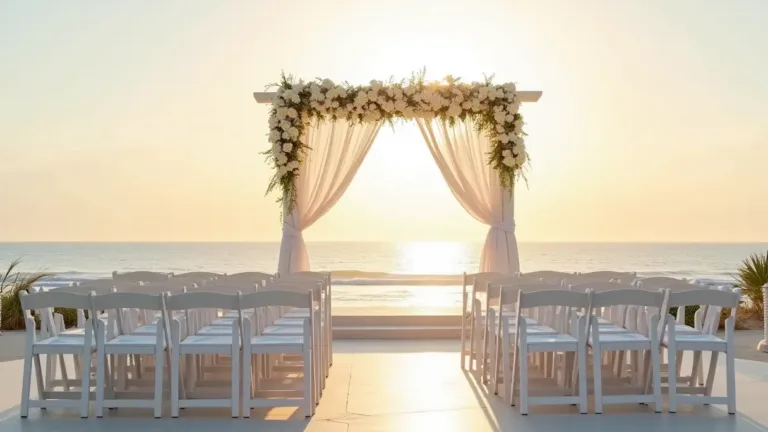
A destination wedding is not just a vacation with a nicer reason. It has a fixed date that cannot move, a vendor contract with deposits already paid, and a group of guests who each booked their own flights and hotel rooms around one event. That combination changes what you should actually be looking for in a travel insurance policy, and it also means two different products can apply: standard travel insurance for the trip itself, and a separate wedding insurance policy for the event.
Here is how the two fit together, what each one actually covers, and where the gaps usually show up.
What Makes a Destination Wedding Different From a Regular Trip
On an ordinary vacation, if your flight is cancelled or you need to rebook a hotel night, the inconvenience is mostly yours to absorb. A destination wedding adds constraints an ordinary trip doesn’t have: the ceremony date is fixed and can’t simply be pushed back a day, a wedding planner or venue may hold non-refundable deposits, and a group of guests, not just one traveler, all have separate bookings riding on the same event actually happening as planned.
That means a disruption doesn’t just cost one person a rebooking fee. A missed flight can mean missing the ceremony entirely, not just missing a few days of a longer trip.
Two Different Products, Often Confused
This is the distinction that trips people up most: travel insurance and wedding insurance are not the same thing, and having one does not mean you have the other.
- Travel insurance (also called trip protection) covers each traveler’s own trip: their flights, hotel, and covered reasons for cancelling or cutting the trip short. This is what a guest, or the couple, buys the same way they would for any international trip.
- Wedding insurance is a separate specialty policy that covers the event itself: vendor no-shows or bankruptcies, extreme weather forcing a postponement, damage to attire or rings, or liability if a guest is injured at the venue. It’s typically bought by whoever is paying for the wedding, not by individual guests.
A couple can have excellent wedding insurance covering the ceremony and still have every guest exposed if none of them separately bought travel insurance for their own flights and hotel stay, and the reverse is just as true. Decide early who is buying which policy, and confirm that both actually exist rather than assuming one covers the other.
What a Guest’s Travel Insurance Can Actually Cover
For each individual guest (and for the couple’s own trip, separate from the wedding-specific policy), a standard travel insurance plan typically responds to the same categories of loss as it would on any trip:
- Trip cancellation, if you can’t travel at all for a covered reason before departure
- Trip interruption, if you have to cut the trip short after arriving
- Trip delay, if a covered delay costs you a missed connection or an extra night
- Emergency medical treatment abroad, and evacuation if that becomes necessary
- Baggage loss or delay, including the dress, suit, or gifts packed for the event
What it does not do is protect the wedding itself. If the couple’s flight is delayed and they miss their own ceremony, a guest’s individual travel policy has nothing to say about the event being disrupted; it only responds to that guest’s own trip costs.
What Can Trigger a Covered Cancellation
Whether a guest can cancel and be reimbursed depends entirely on the specific list of covered reasons in the policy they bought, not on how understandable the reason feels. Reasons commonly listed by insurers include the traveler’s own sudden illness or injury, the illness, injury or death of a close family member, and severe weather that shuts down travel to the destination. Reasons that are commonly excluded, or only covered under a separate and more expensive upgrade, include simply changing your mind, a scheduling conflict that existed when you booked, or the wedding itself being called off by the couple.
That last point catches people off guard. If the couple postpones or cancels the wedding for personal reasons, most standard travel policies do not treat that as a covered reason for a guest to cancel their own trip and be reimbursed, because the policy is written around events affecting the traveler, not the marrying couple’s decision. A Cancel for Any Reason upgrade, where available, is the one option built to cover exactly this kind of situation, at the cost of a partial rather than full reimbursement and a requirement to buy it soon after the initial trip deposit.
What’s Usually Excluded, Beyond the Wedding Itself
- Any reason not on the policy’s specific covered-reasons list, however reasonable it feels
- Vendor issues on the wedding side (a photographer cancelling, a venue closing) — that risk sits with wedding insurance, not a guest’s travel policy
- Pre-existing medical conditions, unless the policy includes a waiver and you met its timing requirements
- A known event, such as a storm already named and tracked before you bought the policy
Coordinating Coverage Across a Group of Guests
Because each guest typically buys their own travel insurance separately, a destination wedding often ends up with a patchwork of different policies, different insurers, and different covered-reasons lists across the same guest list. That’s normal, but it’s worth being upfront about with the wedding party.
| Situation | Who’s affected | What to check |
|---|---|---|
| The couple’s own flight is delayed | Everyone, since the ceremony may need to shift | Whether the couple has their own trip protection separate from the wedding vendor policy |
| One guest gets sick and can’t travel | Only that guest, for reimbursement purposes | That guest’s own covered-reasons list and whether their illness qualifies |
| A hurricane or storm affects the destination | Potentially the whole group | Whether each guest bought their policy before the storm was named, since a known event is typically excluded afterward |
| The wedding is postponed by the couple | Every guest who already booked | Whether any guest holds a Cancel for Any Reason upgrade, since a standard policy usually won’t respond to this |
Timing and International Destinations
On an ordinary vacation, buying travel insurance a few weeks before departure is usually fine. A destination wedding is booked much further out, often a year or more in advance, and that gap changes two things.
First, a pre-existing condition waiver almost always has a strict window tied to your initial trip deposit, commonly a matter of days. If you wait until closer to the wedding to buy coverage, you can lose access to that waiver entirely, even though the trip itself is still months away. Second, a Cancel for Any Reason upgrade, where it’s offered, carries the same kind of early-purchase deadline. Buying it the week before the wedding is typically too late; it has to be added when you first put down money on the trip.
Because the save-the-date often goes out long before flights and hotels are actually booked, it’s worth treating the deposit being paid as the trigger to look at insurance, rather than waiting until the wedding is coming up soon.
Many destination weddings are held abroad, which stacks ordinary international travel considerations on top of the wedding-specific ones. Confirm that your policy’s destination coverage actually names the country or region, not just the word international, since some policies carve out specific countries or regions. If the wedding is somewhere with limited medical infrastructure, an evacuation benefit that gets a guest to adequate care matters as much here as on any other trip to that kind of destination. And if the venue is remote (a smaller island, a rural estate, a location reached by a connecting regional flight) build in the same delay and missed-connection buffer you would for any trip with tight transfers, since a missed connection here risks missing the ceremony, not just losing a vacation day.
A Checklist Before You Book
- Confirm who is buying wedding insurance for the event itself, and who is buying individual travel insurance for their own trip — these are two separate purchases
- Read the specific covered-reasons list on your own policy rather than assuming a wedding-related cancellation is automatically included
- If you want protection against the wedding being postponed or called off, ask specifically about a Cancel for Any Reason upgrade and its purchase deadline
- Buy early enough to qualify for any pre-existing condition waiver the policy offers
- Check that the policy’s destination coverage actually includes where the wedding is being held, especially for less common venues or islands
- Save the 24-hour assistance number, and share it with the wedding party in a shared document, not just in one person’s inbox
Frequently Asked Questions
Does travel insurance cover a destination wedding being cancelled by the couple?
Usually not under a standard policy. Most travel insurance is written around covered reasons affecting the traveler, such as illness or a family emergency, not the couple's own decision to postpone or call off the wedding. A Cancel for Any Reason upgrade is the option built for this kind of situation, where it's offered.
Do I need separate travel insurance if the couple already has wedding insurance?
Yes. Wedding insurance covers the event itself, such as vendor issues or venue problems, and is typically bought by whoever is paying for the wedding. It does not cover an individual guest's own flights, hotel, or medical costs. Each guest generally needs their own travel insurance for their own trip.
What happens if a guest gets sick right before a destination wedding?
If that guest holds their own travel insurance and the illness qualifies under the policy's covered-reasons list, they can typically be reimbursed for their non-refundable trip costs. This only protects that individual guest's own booking, not the wedding or other guests' trips.
Is a hurricane warning near the wedding destination automatically covered?
Only if the policy was purchased before the storm was named or the warning was issued. Once a storm is a known, tracked event, most insurers treat losses from it as excluded for anyone who buys a policy afterward, so timing matters more than the severity of the storm itself.
