
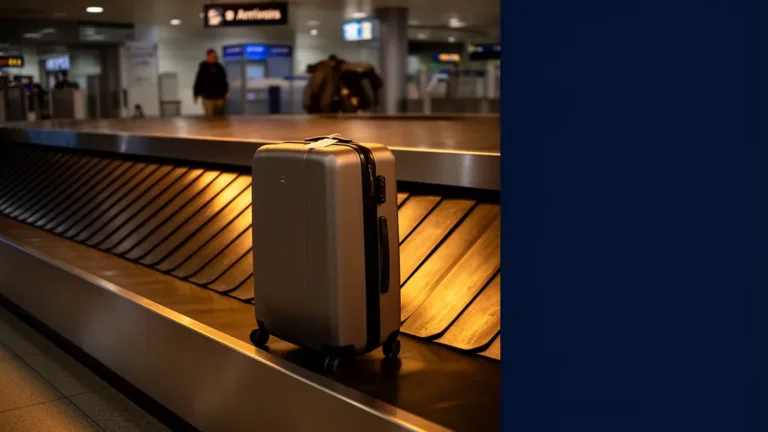
Baggage delay insurance reimburses essential items you buy because your checked bag did not arrive, once the delay passes the number of hours set in your policy. Lost luggage insurance is a separate benefit: it pays the depreciated value of contents the carrier declares lost. Both pay only what the airline does not. US law makes the carrier liable for domestic baggage up to a dollar floor, and the Montreal Convention governs international trips, so the airline report is step one of any insurance claim.
Key facts
- Baggage delay pays for essentials bought after the policy's waiting period; lost luggage pays for the bag's contents at depreciated value.
- Insurers pay excess of the airline, so the carrier's delay report or property irregularity report comes before any insurance claim.
- Most loss benefits apply per-item caps, a valuables sub-limit, and often exclude valuables that were checked rather than carried in the cabin.
Both benefits also sit behind the airline. In most wordings the insurer pays only what the carrier does not, which means the airline claim is not optional paperwork; it is the step that makes the insurance claim possible.
Baggage delay vs. lost luggage: two benefits, two triggers
| Baggage delay | Baggage loss or damage | |
|---|---|---|
| What triggers it | A checked bag not delivered within the number of hours stated in the policy | The bag is destroyed, damaged, or formally declared lost by the carrier |
| What it pays | Reasonable essential items bought while you wait | The value of the contents, usually after depreciation for age and wear |
| Waiting period | Defined in hours in the policy schedule; there is no industry standard | Often only once the carrier accepts the bag is lost |
| Order of payment | Usually excess over whatever the airline pays or provides | Usually excess over the carrier’s liability |
| Where it applies | Commonly only away from home, and often not on the final leg home | Anywhere on the trip, subject to policy conditions |
| Evidence needed | The airline’s delay report and dated receipts for what you bought | Property irregularity report, itemized contents list, proof of ownership |
Two structural points follow from that table. The delay benefit is capped low, because it is meant to buy a change of clothes and toiletries, not to replace a wardrobe. And the loss benefit pays actual cash value in most policies, meaning depreciated value rather than the cost of buying the item new, unless the policy specifically says replacement cost.
The airline is the first payer
Airline liability for baggage is set by law, not by goodwill, and the rules differ by itinerary.
International journeys
On international itineraries between countries that are party to it, the Montreal Convention governs. It makes the carrier liable for destruction, loss, damage or delay of checked baggage up to a limit expressed in Special Drawing Rights, an International Monetary Fund unit of account. That figure is reviewed every five years and has been revised more than once, so check the current limit published by ICAO or your carrier rather than a number quoted in an older article.
The Convention also sets deadlines that matter far more than most passengers realize:
- Written complaint for damage to checked baggage: within seven days of receiving the bag
- Written complaint for delay: within twenty-one days from the date the baggage was placed at your disposal
- A passenger may treat baggage as lost if it has not arrived twenty-one days after it should have
- Any court action must be brought within two years
Miss the written-complaint deadline and the claim against the carrier is generally barred, which in turn undermines the insurance claim that was written to sit on top of it.
US domestic journeys
On domestic US itineraries the Montreal Convention does not apply. Instead, airline liability for checked baggage is capped by a dollar figure set in Department of Transportation regulation and periodically adjusted for inflation. US rules also require airlines to refund the checked-bag fee when a bag is substantially delayed, with the qualifying number of hours set by regulation and differing for domestic and international flights. Both the liability cap and the refund thresholds are current-value items, so take them from the DOT site rather than from memory.
What counts as an essential item
Baggage delay insurance reimburses necessities, and the assessment of what was necessary is made by the insurer against the circumstances of the trip. In practice that means underwear, basic clothing, toiletries, and items you needed for a specific commitment such as a suit for a funeral or work clothes for a conference. It does not usually mean a designer replacement of what was in the bag, souvenirs, or electronics you could reasonably have done without for two days.
Three practical rules keep this claim clean:
- Buy only after the waiting period stated in your policy has actually elapsed. Purchases made in the first hour, before the benefit is triggered, are commonly refused outright.
- Keep dated, itemized receipts. A card statement line is not an itemized receipt.
- Note what the airline gave you. Many carriers provide an amenity kit or a cash allowance, and the insurer pays only above that.
Lost luggage claims: per-item caps, valuables sub-limits and exclusions
Loss claims are where the fine print does the work. Most policies apply a per-item limit as well as an overall limit, so a single expensive item is capped well below the headline figure. Most also apply a combined limit to categories such as jewelry, watches, cameras and electronics. And most exclude a defined list outright, which typically includes cash and currency, travel documents, contact lenses and prosthetics, business samples, and fragile items packed in checked baggage.
There is a further exclusion that is easy to trip over. Many policies exclude valuables that were checked rather than carried in the cabin, on the reasoning that the passenger chose to expose them. If a laptop, camera body or jewelry goes into the hold, the loss benefit for it may not apply at all regardless of the sub-limit.
What this means: file the airline report before you leave the airport, wait out the policy’s stated delay period before buying anything, keep itemized receipts, and treat the airline claim as step one rather than an alternative. For loss claims, assume actual cash value, per-item caps and a valuables sub-limit, and keep anything expensive in the cabin so the exclusion never applies.
Where the benefit does not apply at all
- The journey home. Most policies exclude baggage delay on the final leg to your home city, because you have your own belongings there.
- Bags shipped separately. Unaccompanied baggage or items sent by freight or courier is usually excluded from both benefits.
- Items left unattended. Theft from an unattended vehicle or a public place is commonly excluded or heavily restricted.
- Delay caused by customs or a public authority. Confiscation or detention by customs is a standard exclusion.
- Wear, tear and manufacturing defect. Damage that is not caused by a single identifiable event is excluded.
Cards complicate this further rather than simplifying it: many travel cards carry their own baggage delay and lost luggage benefits, structured the same way but with different hour thresholds and different caps, and the Guide to Benefits for your specific card and issue date is the only document that governs. Where both a card and a policy respond, one usually pays first and the other tops up. Which is which is set out in the wordings, and the general principle is covered in credit card travel insurance versus a standalone policy.
When the baggage section deserves a closer read
For a short nonstop trip with a suitcase of ordinary clothes, the baggage benefit is a minor line in the policy and the sub-limits above rarely bite. For some trips it is the section worth reading line by line before you buy, rather than skimming:
- Expensive gear. Camera bodies, lenses, and sports equipment are where the per-item cap, the valuables sub-limit, and the checked-valuables exclusion do the most damage to a claim.
- Medical supplies or equipment you cannot easily replace on the road, which may fall under a medical benefit, the baggage benefit, or neither, depending on the wording.
- Destinations where replacing essentials locally is difficult or expensive. A delay benefit sized for a change of clothes and toiletries goes much less far in some places than others.
- Itineraries with several handoffs, covered below.
Cruises, connections, and multi-stop itineraries
Bags go astray more often on itineraries with several handoffs than on a single nonstop flight. Every connection, change of airline, or port stop is another point where a bag can be misrouted, so a multi-city trip carries more exposure than the same number of days spent in one place.
Cruise travelers face a particular wrinkle. If a delayed bag does not reach the ship before it sails, the traveler is at sea without it for days, well beyond the kind of short domestic delay that a policy’s waiting period was designed around, and with no shop to buy replacements from. Some plans address this with cruise-specific language or a higher delay limit for sail-away situations; others apply the same general delay benefit regardless of trip type. If your trip involves a cruise, several connecting flights, or multiple destinations in one policy period, ask the insurer directly whether the plan treats a multi-leg delay any differently than a single missed connection, rather than assuming the standard benefit was written with that scenario in mind. In those cases it is worth comparing plans specifically on their baggage section, not on the headline medical or cancellation limits.
Baggage cover versus trip interruption and your home policies
Baggage benefits are sometimes confused with trip interruption coverage, but they answer different questions. Trip interruption addresses your unused, prepaid trip costs when a covered reason cuts the journey short; the baggage benefits address the physical bags and their contents. A canceled cruise leg and a missing suitcase are handled under different sections of the same policy, and a claim filed under the wrong section is likely to be delayed or rejected. How the interruption side works is set out in trip interruption insurance explained.
Beyond the credit card benefits discussed above, a homeowner’s or renter’s policy may also cover personal belongings away from home, including a bag stolen on a trip. It is coordinated the same way a card benefit is: one policy pays first, and you may have to file with it and show its outcome before the other pays the remaining gap. The primary-versus-secondary logic behind that order is explained in primary vs. secondary travel insurance. Reading the coordination-of-benefits language in each policy before you travel avoids discovering the order of payment at the point where you actually need to file.
Before you buy: what to confirm in the certificate
Because the baggage benefits vary so much between insurers, by plan tier within the same insurer, and sometimes by the state the policy is issued in, the details that decide a claim are in the certificate of insurance for the plan you are actually buying, not in a comparison page or the marketing copy. Before paying, confirm each of the points covered above in that document:
- The overall baggage limit and the per-item sub-limit inside it.
- Whether the loss benefit pays actual cash value or replacement cost.
- The delay waiting period in hours, and what the policy counts as a qualifying delay.
- Which items are excluded or capped separately, and whether the insurer sells an add-on that raises the limit for valuables or electronics.
- Whether the benefit is primary or secondary to airline liability and to any card or home policy you already hold.
Frequently asked questions
When is a delayed bag officially lost?
On international journeys under the Montreal Convention, a passenger may treat baggage as lost if the carrier admits it is lost or if it has not arrived twenty-one days after it should have. Airlines often maintain their own tracing period of a similar length. Until then the claim is a delay claim, not a loss claim, and the two pay different things.
Can I claim from both the airline and my insurer?
You can claim from both, but not to be paid twice for the same loss. Travel policies normally pay excess of the carrier’s liability, so the insurer will ask what the airline paid or provided and deduct it. Attempting to conceal an airline payment is straightforward claims fraud and is one of the reasons documented in why claims get denied.
Does baggage delay cover apply on the flight home?
Usually not. Most wordings restrict the benefit to delays away from your home city on the outbound or in-trip legs. If your bag is delayed on arrival home, the airline claim remains available but the insurance benefit generally does not respond.
What if the bag is delayed because the flight itself was disrupted?
They are separate benefits with separate triggers, and a single disruption can engage more than one. A missed connection that separates you from your bag can produce a delay claim and a trip delay claim at once, each assessed on its own terms and each needing its own evidence. How the flight side works is set out in what actually triggers a flight delay payout, and the file you need for either is described in filing a travel insurance claim.
Planning a European Christmas market route? The holiday-market travel insurance guide covers winter rail delays, short itineraries, closures, cold illness and market purchases.
Traveling with a wheelchair, assistive device or accessibility requirements? The Europe accessible-travel insurance guide separates carrier rights, equipment protection, confirmed lodging, companions and medical continuity.
A new prescription, a routine refill and medicine lost with baggage follow different rules. Use the travel medical insurance prescription medication guide to choose the right benefit and build the required record.
Wheelchairs and mobility equipment need a separate payer analysis. Use the travel medical insurance for mobility aids guide to compare airline liability, baggage limits, repair, rental and medical benefits.
Hearing aids do not fit one automatic baggage or medical benefit. Use the travel medical insurance for hearing aids guide to separate loss, damage, airline responsibility, repair and clinical treatment.
Portable oxygen travel requires five aligned layers: clinical clearance, accepted equipment, power, destination supply, and insurance. Use this senior portable oxygen travel insurance guide to verify airline rules, Medicare DME limits, delay, damage, and medical emergencies.
A CPAP trip plan must protect therapy, power, accessories, and the device before insurance can protect a covered loss. Use this senior CPAP travel insurance guide to verify Medicare DME rules, airline handling, batteries, water, delay, damage, and replacement.
Ostomy supplies are expected care, while an unexpected complication, baggage loss, and trip interruption follow different insurance rules. Use this senior ostomy travel insurance guide to plan supplies, screening, delays, Medicare coverage, emergencies, and claims.
Sources and further reading
- 14 CFR Part 254 – Domestic Baggage Liability — Section 254.4: on flights using large aircraft, an air carrier may not limit its liability for loss, damage or delay of baggage to less than $4,700 per passenger (amended 89 FR 84819, effective Jan. 22, 2025). Supports the US domestic journeys section and the $4,700 key fact.
- 14 CFR Part 260 – Refunds and Other Consumer Protections — Defines a 'significantly delayed checked bag' as not delivered within 12 hours (domestic), 15 hours (international with a nonstop US-foreign segment of 12 hours or less) or 30 hours (longer nonstop segment) of the last segment's arrival, requires a prompt refund of the checked-bag fee, and conditions the refund on the passenger filing a Mishandled Baggage Report. Supports the bag-fee refund statement and the 'file the airline report before you leave the airport' advice.
- EUR-Lex – 22001A0718(01) – Convention for the Unification of Certain Rules for International Carriage by Air (Montreal Convention) — Article 17: a passenger may treat checked baggage as lost if the carrier admits it or it has not arrived 21 days after it should have. Article 31: written complaint within 7 days of receipt for damage to checked baggage and within 21 days for delay. Article 35: actions must be brought within two years. Article 22 sets the baggage liability limit in Special Drawing Rights, subject to periodic revision. Supports the International journeys section and the FAQ on when a delayed bag is officially lost.
