Travel insurance for South Africa should be chosen around the remote part of your trip, not the city part: check the medical evacuation limit, whether open-vehicle game drives are covered or excluded as hazardous, and whether malaria treatment is covered as an illness. Cape Town and Johannesburg have modern private hospitals. A safari lodge in Kruger National Park or a private reserve can be hours away by road or reachable mainly by light aircraft, and the CDC notes that trauma care centers are uncommon outside urban areas. A standard policy is built for the first trip; the gaps show up on the second.
Key facts
- Malaria risk is concentrated in parts of Kruger National Park, northeastern KwaZulu-Natal, Limpopo, and Mpumalanga, not Cape Town or Johannesburg.
- Arriving directly from the United States, no yellow fever vaccine is required; it is required if you arrive from a country with transmission risk.
- The CDC says emergency transport from a remote area to a quality hospital could otherwise cost more than $100,000.
- Some general policies exclude open-vehicle game drives as hazardous activities; confirm coverage in writing before booking a safari.
- Trips that add Namibia, Botswana, or Zimbabwe need a policy whose coverage territory includes every country on the itinerary.
- For stolen belongings, get a police report (a local case number) at the time; insurers generally require it to pay a claim.
A standard travel insurance policy is built around the first kind of trip. The second is where gaps show up, and they show up at the worst possible time: after something has already gone wrong.
Malaria risk is regional, not national
Malaria risk in South Africa is not spread evenly across the country. It is concentrated in specific low-altitude, subtropical areas, including parts of Kruger National Park, northeastern KwaZulu-Natal, and parts of Limpopo province. Cape Town, Johannesburg, and most of the Garden Route are not malaria-risk areas.
If your itinerary includes any malaria-risk region, talk to a travel health provider about prevention well before departure — antimalarial medication is typically started before the trip and continued for a period after leaving the risk area, so this is not something to arrange the week you fly out. This is a medical decision for a doctor, not an insurance one, but it affects what you should ask your travel insurer: confirm that any prescribed antimalarial medication and, if it comes to it, malaria treatment abroad are covered as an illness under the policy’s medical benefit.
Why safari trips need a higher medical evacuation limit
A private game reserve or a remote section of a national park can be a genuinely long way from the nearest hospital capable of handling a serious injury or illness. Getting a traveler from a bush lodge to a hospital in Johannesburg or Cape Town can mean a light aircraft transfer arranged and paid for before treatment can even begin, and that kind of transport is expensive well beyond what a routine ambulance ride costs.
Standard travel medical policies often carry medical evacuation limits sized for typical trips, not for evacuation from a remote reserve. Before booking a safari, check two things specifically:
- The medical evacuation limit on the policy, and whether it is clearly sized for evacuation from a remote location rather than a routine transfer between city hospitals.
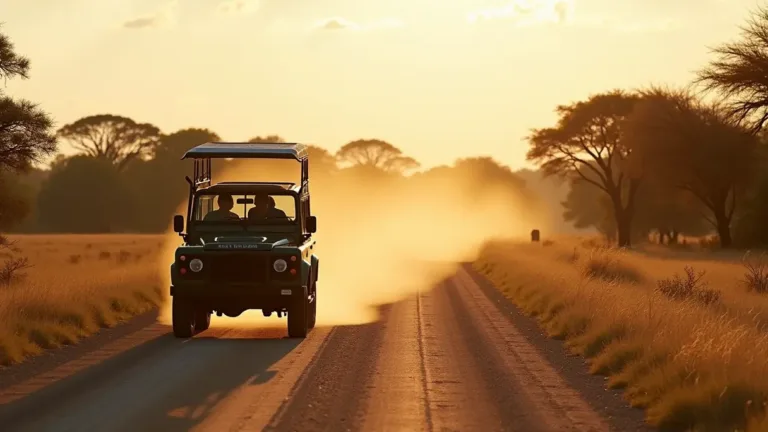
- Whether safari activities are covered at all. Some standard policies exclude activities they classify as adventure or hazardous, and a game drive in an open vehicle can fall under that exclusion depending on how the insurer defines it. Confirm this in writing with the insurer rather than assuming a safari counts as ordinary sightseeing.
If either answer is unclear or unsatisfactory, look at a plan marketed specifically for adventure or safari travel, which is typically built with these two points already addressed, rather than assuming a general-purpose policy will stretch to cover them.
What good care looks like, and where it runs out
Private hospitals in Cape Town, Johannesburg, Durban, and other major cities generally provide a high standard of care, and many travelers are surprised by how modern they are. The public hospital system operates under different resource constraints and is not typically where a travel insurer’s network directs an insured traveler when a private option is available.
The gap is distance, not quality. A well-equipped private hospital does you no good if it is a four-hour drive or a chartered flight away from where the emergency happened. This is exactly what medical evacuation coverage exists to close, and it is why the limit matters more here than it would for a trip confined to major cities.
Road travel, theft, and multi-country trips: what else to check
| Consideration | Why it matters here |
|---|---|
| Road travel coverage | Self-drive routes, including popular ones like the Garden Route, involve long stretches between towns. Confirm the policy’s emergency assistance line can dispatch help to a rural location, not just a city address. |
| Trip cancellation and theft | Petty theft and vehicle break-ins are a real consideration in some urban areas. Check what documentation the policy requires to file a claim for stolen belongings, and get a police report (an affidavit, locally called a “case number”) at the time, since insurers generally require it. |
| Connecting to other Southern Africa stops | Trips combining South Africa with Namibia, Botswana, or Zimbabwe (Victoria Falls) should confirm the policy’s coverage territory includes every country on the itinerary, not just the country you fly into. |
| Yellow fever certificate | South Africa can require proof of yellow fever vaccination if you are arriving from a country with risk of yellow fever transmission. This is an entry requirement, not an insurance benefit, but confirm it separately with your airline or a travel clinic before you fly. |
A checklist before you buy
- Does the policy explicitly cover safari game drives and similar activities, or exclude them as hazardous?
- What is the medical evacuation limit, and is it described as adequate for evacuation from a remote area, not just a routine transfer?
- Does the policy’s assistance line operate 24/7 and coordinate evacuations in Southern Africa specifically, rather than only in major world cities?
- If your route includes a malaria-risk area, does the medical benefit clearly cover illness treatment, including malaria, without a specific exclusion?
- If your trip spans more than one Southern African country, does the coverage territory include all of them?
None of this is unique to South Africa in principle — remote-area evacuation and regional disease risk are considerations on any safari-style trip. But South Africa’s mix of first-rate cities and genuinely remote reserves in the same itinerary is exactly the situation where checking the fine print before you buy, rather than after you need it, makes the difference.
Frequently Asked Questions
Is all of South Africa a malaria risk area?
No. Malaria risk is concentrated in specific lower-altitude regions, including parts of Kruger National Park, northeastern KwaZulu-Natal, and parts of Limpopo. Cape Town, Johannesburg, and most of the Garden Route are not malaria-risk areas. Confirm your specific itinerary with a travel health provider.
Does standard travel insurance cover safari game drives?
It depends on the policy. Some general-purpose plans exclude activities they classify as hazardous or adventure-related, which can include open-vehicle game drives. Confirm this specifically with the insurer before booking rather than assuming it is included.
Why does medical evacuation coverage matter more for a safari trip?
Remote game reserves and national parks can be far from the nearest hospital equipped to handle a serious emergency, sometimes reachable only by light aircraft. A medical evacuation limit sized for routine transfers between city hospitals may not be adequate for evacuation from a remote reserve.
Do I need a yellow fever vaccination to enter South Africa?
It depends on where you are traveling from. South Africa can require proof of yellow fever vaccination for travelers arriving from a country with yellow fever risk. This is a separate entry requirement from travel insurance, so confirm it with a travel clinic or your airline before departure.
Sources and further reading
- South Africa – Traveler view | Travelers' Health | CDC — Malaria-risk areas (Kruger National Park, uMkhanyakude District of KwaZulu-Natal, Mopani and Vhembe districts of Limpopo, Ehlanzeni District of Mpumalanga); yellow fever vaccine not required for direct travel from the US but required when arriving from a country with transmission risk; trauma care centers are uncommon outside urban areas and medical evacuation insurance can be helpful.
- Travel Insurance | Travelers' Health | CDC — Your current medical insurance may not cover care in another country; medical evacuation insurance covers emergency transportation from a remote area to a high-quality hospital, which could otherwise cost more than $100,000.