
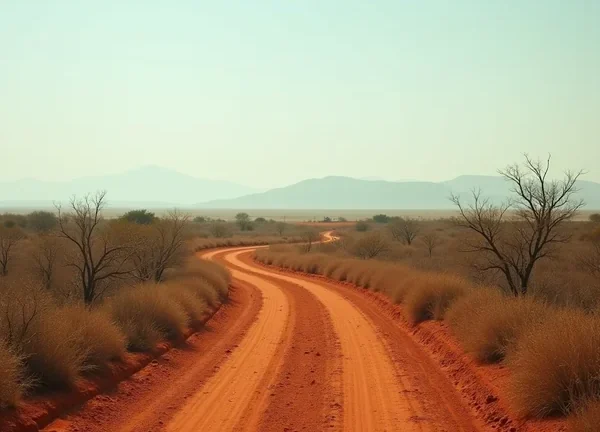
What self drive safari coverage actually has to account for
Hiring a four-wheel drive and taking yourself through a game reserve is a different insurance problem from riding in a guided vehicle, and the difference is not the animals. The difference is that you become the driver. Four separate contracts can respond when something goes wrong on a self-drive trip, and travelers tend to buy one of them, assume it absorbs the rest, and discover at a police post outside the park gate which parts nobody actually insured.
Self drive safari coverage is a stack rather than a single product. A travel policy bought in the United States covers you, the person. The rental agreement covers the vehicle. Local law governs what you owe a third party you injure. A card benefit may cover part of the vehicle damage if the rental was paid with that card. Each one has its own trigger, its own excess and its own list of situations where it steps back out.
The four contracts, and what each is for
The rental agreement and its damage waiver
The waiver sold at the rental counter is not insurance in the ordinary sense. It is a contractual promise by the rental company not to pursue you for damage to its own vehicle, up to a limit and subject to an excess, and it is written with carve-outs. On African self-drive fleets the carve-outs cluster in predictable places: tires, windscreens, undercarriage, water damage from a river crossing, and single-vehicle rollovers. Those are the parts of a vehicle that gravel and sand actually break, which is why a waiver can be in force and a bill still arrive.
Two charges sit outside the waiver almost everywhere. Recovery, meaning the cost of sending a truck to fetch an immobilised vehicle from a remote track, is usually billed at cost. Loss of use, meaning the rental income the company says it lost while the vehicle was off the road, is a separate line and rarely waived. Both can exceed the repair itself on a long transfer.
Third-party liability under local law
Damage you cause to another person or another vehicle is not a travel insurance benefit. It is motor liability, it is regulated by the country you are driving in, and it comes from the rental agreement or from a policy bought locally. A US travel medical policy will treat an injured third party as somebody else’s claim, because that is what it is. Read the rental agreement for the liability limit specifically, because a low statutory minimum is common and a top-up is sold separately.
A credit card’s rental benefit
Card rental benefits are worth checking and worth reading closely, because the standard structure of them collides with a safari in three places. Many are written to exclude off-road use. Many exclude certain vehicle categories, which can catch a large converted 4×4 with a rooftop tent. Many exclude rentals beyond a fixed number of consecutive days, which catches a long overland loop. And a benefit that applies at all normally requires the whole rental to be paid on that card and the counter waiver to be declined. Confirm the terms with the issuer for the specific countries on the route rather than assuming the benefit travels. Our comparison of card benefits against a standalone policy sets out where the two structures differ.
The travel policy
The travel policy covers the human outcomes: emergency medical treatment, evacuation, the trip cut short, baggage. It is not a motor policy and does not pretend to be. What matters for a self-drive itinerary is whether the way you intend to drive falls inside its activity wording, and whether its evacuation limit is realistic for where you will be. Both are covered in more detail in our guide to travel insurance and rental cars abroad.
Who pays for what on a self-drive safari
| What happens | Which contract responds | The usual catch |
|---|---|---|
| Damage to the rental vehicle | Rental waiver, sometimes a card benefit | Tires, glass, undercarriage and water damage are commonly excluded |
| Recovery of a stuck or broken vehicle | Rental agreement, billed to you | Charged at cost and outside the waiver |
| Injury to another person | Motor liability under local law | Statutory limits can be low; a top-up is separate |
| Your own injury and hospital treatment | Travel medical section | Activity and license conditions must be met |
| Transfer from a bush clinic to a hospital | Emergency evacuation benefit | Needs pre-authorization and a workable limit |
| Trip cut short after an accident | Trip interruption section | Pays unused prepaid cost, not the vehicle bill |
| Items stolen from a parked vehicle | Baggage section | Unattended-vehicle wording and per-item limits |
The exclusions that decide a self-drive claim
Off-road driving, and what the wording means by it
Policies that mention off-road driving usually mean leaving a formed road surface. Game reserve tracks are a gray area, because a sand track inside a national park is a designated route in the park’s eyes and an unformed surface in an underwriter’s. Where a policy excludes off-road use outright, driving on park tracks can sit outside cover for the vehicle even while the medical section still responds to your injury. That split is normal and worth understanding before departure: the person and the vehicle are insured by different documents and can be treated differently by the same event.
License, permit and the named driver
Two conditions appear in almost every travel wording and in every rental agreement. You must hold a license valid for the vehicle in the country you are driving in, which for much of southern and eastern Africa means an International Driving Permit carried alongside the home license. And the person behind the wheel must be a driver named on the rental agreement. An unnamed driver at the moment of an accident can void the waiver and give the travel insurer a route to decline the associated claim, which is an expensive way to save a counter fee.
Alcohol, night driving and the curfew
Alcohol exclusions are standard and are applied to the driver rather than to fault. Separately, many reserves prohibit movement between gate closing and gate opening, and many rental agreements bar night driving on unfenced roads. Driving outside those hours is a breach of the agreement, and a breach is what an adjuster looks for first. Our list of standard policy exclusions shows how consistently these clauses are written across the market.
Distance is the part travelers underprice
The reason a self-drive itinerary changes the shape of a policy is geography rather than risk appetite. A vehicle incident hours from a tarred road turns a straightforward orthopaedic injury into a logistics operation: a bush clinic first, then a fixed-wing transfer to a city hospital, sometimes a second transfer home. That chain is priced by the leg, and the evacuation benefit is the part of a policy that pays for it. Our guide on what an evacuation limit has to be works through how those legs add up, and the South Africa safari guide covers the health side of the same trip.
The same distance argument applies to breakdown support. A roadside assistance product sold for a city rental is often written around a response radius, and a track deep inside a reserve sits outside it. Ask the rental company what its own recovery process is, how long it takes, and what it charges, because that answer, not an insurance clause, is what determines the cost of a bad afternoon.
What to settle before you drive away
Four checks cover the ground. Confirm the activity wording of the travel policy describes the driving you intend to do, in writing, before departure. Read the rental agreement for the excess, the tire and glass position, the recovery charge and the liability limit, and photograph the vehicle at handover. Name every driver on the agreement. And confirm the evacuation limit and the assistance line’s number are stored somewhere you can reach without a data connection, because the number is what activates the benefit.
None of this makes a self-drive trip a bad idea. It makes it a trip where the paperwork is part of the preparation, in the same way spare fuel and water are. When a claim is made, our guide to the documentation that gets a claim paid covers what the file needs to contain.
