

Travel insurance for El Salvador from USA trips should be tested against the exact surf activity, coastal warning and route to appropriate medical care. A supervised lesson near La Libertad, independent surf day and inland road transfer create different operator, rescue and payment questions. Build the audit around the actual beach and itinerary.
Key takeaways
- Name the surf activity, skill level, supervision and equipment.
- Check official swell, current, rain and beach-warning information.
- Verify how a coastal patient reaches appropriate city care.
- Separate board damage, rental vehicle loss and medical benefits.
- Keep flags, forecasts, operator reports, bills and assistance approvals.
Planning information reviewed August 16, 2026. Beach warnings, ocean conditions, roads, medical access, operator services and policy wording can change. Verify current official information for the exact coast and dates.
Build the surf and road itinerary
List the airport, city stays, beach towns, surf breaks, lesson times, board transport, rental roads and prepaid bookings. Record the operator, nearest response point and realistic hospital route for every coast overnight. Add the first nonrefundable payment date.
The U.S. Department of State’s current El Salvador travel information says Pacific beaches can have dangerous currents and undertows, even for skilled swimmers. It notes that lifeguard presence and hours vary and that injured travelers may need to reach a major city for appropriate care.
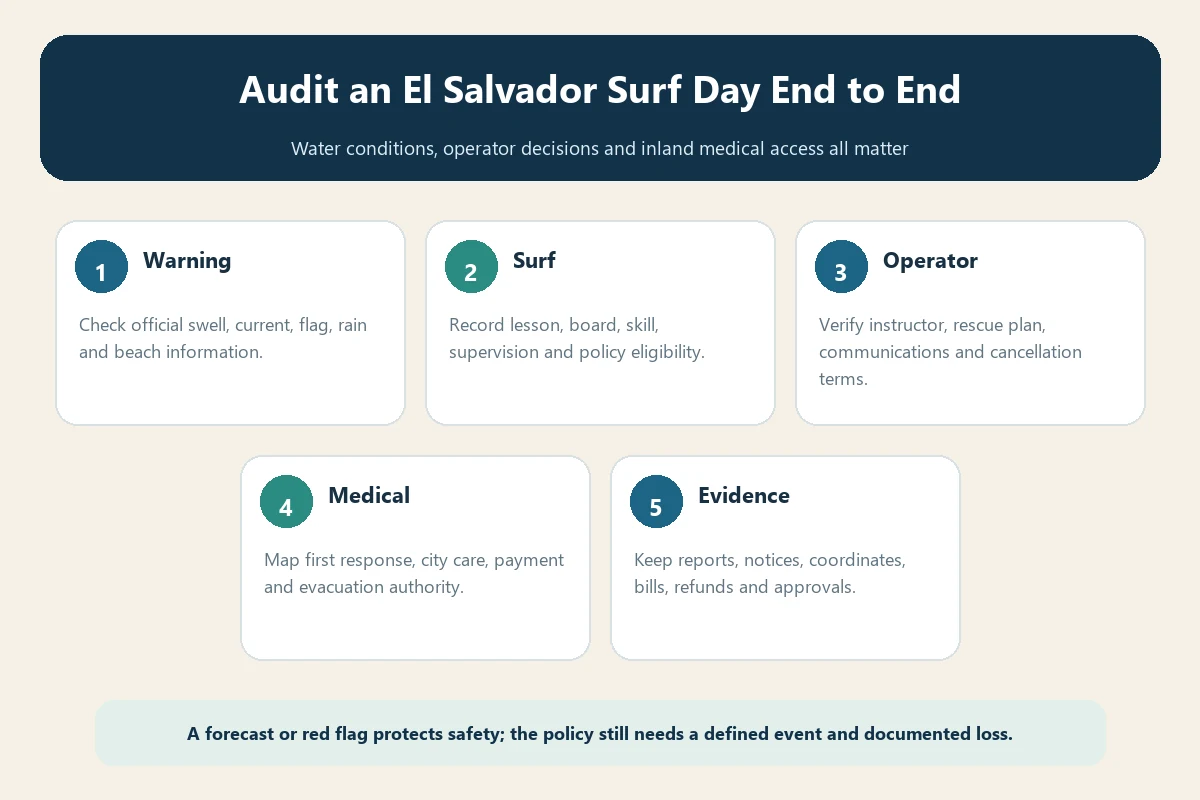
Describe the surf activity precisely
Tell the insurer whether the traveler is taking a beginner lesson, surfing independently, joining a camp, entering a competition or using a boat to reach a break. Add the board type, supervision, participant age and any instruction or paid role.
Check exclusions for professional or competitive activity, high-risk water sports, rescue, alcohol and travel against a warning. Ask whether an adventure endorsement is required and whether medical, rescue and equipment share one limit. The adventure-activity exclusion guide provides a named-sport checklist.
A policy can list surfing as eligible without covering a board, canceled lesson or voluntary change because the waves look uncomfortable.
Use official ocean information before entering
El Salvador’s Ministry of Environment and Natural Resources publishes current hazard information through its official portal. Its updates can describe swell, rip currents, rain, wind and coastal impacts. Save the dated product for the actual beach and session time.
El Salvador’s Civil Protection authority coordinates emergency alerts and response. Compare national or departmental notices with local flag and lifeguard instructions. Stay out of the water when a red or black flag or official instruction says to do so.
An official warning is first a safety tool. For insurance, also record the defined effect on a booking, such as an operator cancellation, closure or interruption.
Audit the surf operator and rescue plan
Record the legal operator name, instructor, student ratio, board and leash, first-aid equipment, communication, beach selection and cancellation terms. Ask who monitors conditions and who can stop the session. Keep the booking page and waiver version.
Ask how an injured surfer is removed from the water, where first aid occurs and which responder or vehicle takes over. Operator rescue, public ambulance and insured medical evacuation are separate stages.
Map coastal response to city care
The State Department says ambulance services are not widely available and may lack advanced equipment. Health facilities are more available in cities, while rural access is harder. Identify a realistic provider and transport path rather than only the closest map pin.
Call the U.S. health plan about foreign emergency care, claim forms, authorization and reimbursement. Private hospitals may require upfront payment or proof of accepted insurance. The health insurance abroad guide helps identify provider and payment gaps.
Carry a medical summary, allergies and assistance number offline. Ask the insurer whether it can coordinate payment with the intended facility.
Separate ambulance, hospital transfer and evacuation
A traveler may reach a local facility by private vehicle or ambulance, then need transfer to a better-equipped hospital. International evacuation is another possible stage. Ask who decides medical necessity and selects the receiving facility.
Confirm preauthorization, companion arrangements and whether evacuation ends at the nearest appropriate hospital. The remote evacuation guide explains the transport authority chain.
Audit the coastal road separately
The State Department advises daylight travel between cities because of road conditions, hilly terrain, landslides and limited lighting. Build margin around surf sessions and flights. Do not plan a tight night transfer after a late afternoon lesson.
For a rental, check liability, collision protection, board racks, prohibited roads, towing and replacement procedures. The rental car abroad guide separates motor claims from medical and trip losses.
| Loss | First contract or clause | Evidence |
|---|---|---|
| Surf injury | Medical and sport eligibility | Instructor report, diagnosis and bill |
| Water rescue | Rescue or evacuation wording | Beach, coordinates and responder record |
| Damaged rental board | Operator agreement or baggage benefit | Rental form, photos and assessment |
| Road landslide | Delay or interruption definition | Official notice and route impact |
| Canceled lesson | Supplier terms and covered cause | Operator notice and refund statement |
Connect rain, swell and travel disruption
Rain can trigger flooding or landslides inland while a distant swell affects the coast. A weather notice may cover only specific departments, roads or hours. Save the issuing authority, location, time and later update.
The weather-delay coverage guide shows how a forecast becomes relevant only when it matches a covered event and threshold. A traveler’s sensible decision not to surf may not reimburse a lesson unless the operator cancels or another listed trigger applies.
Classify pre-trip and in-trip changes
A covered event before departure may be cancellation. After travel begins, unused lodging and extra return transport may be interruption. Waiting for a replacement carrier can be delay. Ask the supplier for its refund or credit first.
The delay, interruption and cancellation guide maps each remaining cost to timing. Keep the original itinerary and actual sequence.
Review health history before purchase deadlines
Recent treatment, a medication change or an ongoing condition can interact with a look-back period. A waiver may require purchase soon after the first trip deposit and insurance of all required nonrefundable costs.
Use the pre-existing-condition waiver guide before the window closes. A waiver addresses eligibility, not the availability of coastal medical care.
Test assistance with a real surf case
Give each insurer the same scenario: a U.S. traveler is injured during a supervised lesson at an eligible beach, needs transport to a city hospital and may require a higher-level transfer. Ask who contacts the provider, helps with payment and approves movement.
Then test a red-flag operator cancellation and a landslide affecting the airport road. The assistance line versus claims guide distinguishes live coordination from later eligibility review.
Compare policies with one worksheet
Hold the trip cost, ages, activities and route constant. Record exact pages for surfing, rescue, medical transport, evacuation, rental exclusions, weather triggers and notice.
- Is the exact surf session and supervision eligible?
- How are rescue and ambulance classified?
- Who chooses the city hospital and approves later transfer?
- Which beach or weather notice can trigger a benefit?
- Are board and rental-car losses covered elsewhere?
- What payment and documentation rules apply?
Build the incident file at the beach
Record the break, flag, time, conditions, instructor, symptoms, first responder and assistance case number. Keep the operator report, medical notes, itemized bills, proof of payment, official notices, road records, refunds and replacement receipts.
The travel insurance claim guide provides a chronology for presenting the cause, loss and reimbursement without duplicate claims.
Protect boards and personal equipment
Check the airline, shuttle, rental car and hotel rules for carrying or storing a board. Photograph owned equipment, serial numbers and condition before departure. For rented gear, retain the agreement and damage assessment rather than accepting an unexplained charge.
Baggage coverage may impose per-item or sports-equipment limits and can exclude normal wear, unattended property or damage during use. An airline report, operator report and police report serve different purposes. File the required record before leaving the location.
Plan heat, hydration and medication
A surf session can combine sun, exertion, dehydration and a long road transfer. Follow medical advice, use protective clothing and carry safe water. Store enough prescription medication for delays and keep it within the carrier’s hand-baggage rules.
If a medical problem develops, record symptoms and treatment rather than attributing the cause yourself. The policy and clinician determine whether an illness, injury or pre-existing condition applies. A weather benefit is not a substitute for medical coverage.
Give non-surfing companions a response role
Share the beach, operator, session time and expected return with a companion or trusted contact. Store the policy and assistance instructions where that person can access them. Ask whether the plan addresses companion lodging, bedside travel or dependent return after a covered medical event.
During an incident, one person can preserve the timeline, flag photograph and operator report while another contacts assistance. Clear roles reduce missing evidence and duplicate calls.
Recheck the next day’s surf plan after heavy rain because road access, water quality and beach operations may change even when the swell looks manageable. Ask the operator to state whether it canceled, relocated or completed the session. That dated answer helps separate a service change from a traveler’s voluntary decision and shows which prepaid cost remains after any credit.
Bottom line
The strongest El Salvador plan connects the named surf activity, current coastal warning, operator rescue and route to appropriate care. Check that chain before every session and treat the road, board and medical response as separate contracts with separate evidence.
