
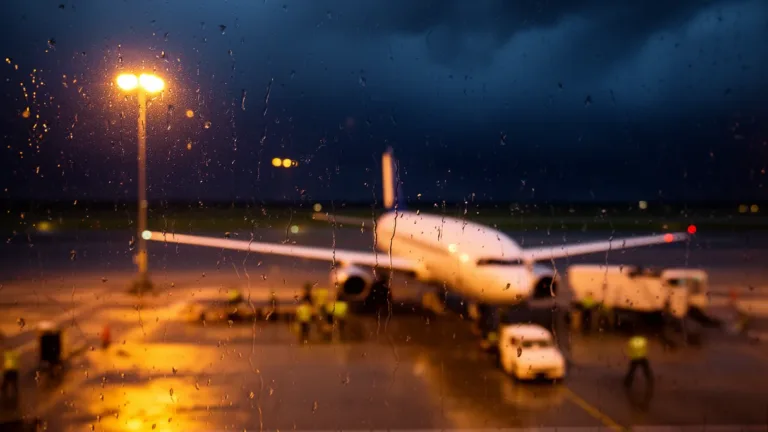
Yes. Severe weather is a named covered reason in most comprehensive travel insurance policies, so a weather delay or a weather-related cancellation is within scope. But four further tests decide whether you are paid: the weather must have actually stopped the carrier, the delay must exceed the policy’s stated hour threshold, the storm must not have been named or publicly known when you bought, and the loss must fall under the right benefit, whether trip delay, trip cancellation or trip interruption. Miss one and the claim fails even though weather is covered.
Key facts
- Severe weather is a covered reason in most comprehensive policies, but only when it stops the carrier or makes lodging uninhabitable.
- Trip delay pays meals and a hotel only after the delay passes the policy's stated hour threshold.
- A storm already named when you buy is a known event and excluded from that policy.
- The Atlantic hurricane season runs June 1 to November 30, so buy at booking for trips in that window.
- Cancel For Any Reason reimburses only a portion of trip costs and must be added within a short window after first payment.
- Airline refunds, vouchers and hotel provision reduce the claim; the policy pays the unrecovered shortfall.
The practical version is this. Bad weather that delays your flight for long enough triggers the trip delay benefit and pays for meals and a hotel. Bad weather that cancels the trip before you leave can trigger trip cancellation and pay your prepaid non-refundable costs. Bad weather that arrives while you are away can trigger trip interruption. Bad weather that simply makes the holiday less pleasant triggers nothing at all. Which benefit responds depends entirely on what the weather did to you, not on how bad it was.
Where weather sits inside a policy
Travel policies do not have a weather section. Weather appears as an entry in the covered reasons list, and that list feeds several different benefits. The usual formulation is something like severe weather or a natural disaster that causes the complete cessation of services by your common carrier, or that renders your destination accommodation uninhabitable. Note how much work those qualifying words do. It is not enough for the weather to be severe. It has to have stopped the carrier or destroyed the accommodation.
This is why the same storm can produce a paid claim for one traveler and a declined claim for another. The traveler whose airline cancelled has a cessation of services. The traveler whose airline operated but who chose not to fly does not. The full logic of how these lists work is set out in the covered reasons list that decides whether you are paid, and weather is one of the clearest illustrations of it.
The three tests weather has to pass
The weather has to stop the carrier, not just look threatening
Insurers ask for evidence that the service was actually delayed or cancelled, and the airline’s own record is the evidence. A forecast is not a loss. A ground stop is. A cancelled sailing is. A road officially closed by the authorities is. Your judgement that conditions looked unsafe is not, no matter how reasonable it was.
The delay has to cross the threshold
Trip delay benefits engage only once a delay exceeds a stated number of hours, measured from scheduled departure or arrival. Below the threshold there is no benefit even if the weather cause is beyond dispute. The threshold is stated in the schedule of benefits and varies between policies, which makes it one of the few numbers genuinely worth comparing when shopping. Expenses incurred before the threshold is met are also frequently non-reimbursable, so a hotel booked early in a delay that later qualifies can still be argued over.
The event must not have been known when you bought
This is the test that catches most people, and it deserves its own section.
The known-event rule and named storms
Insurance covers uncertainty. Once a weather event is publicly identifiable, it stops being uncertain, and policies bought afterwards exclude it. In practice most insurers treat a storm as a known event from the moment it is named, and publish a cut-off date accordingly. Buy before the cut-off and that storm is a potential covered cause. Buy after it and the storm is excluded, although the rest of the policy still works normally for unrelated causes.
Two consequences follow. First, timing is a coverage decision, not an administrative one. The Atlantic hurricane season runs from 1 June to 30 November, and for travel in that window to affected regions, buying at the point of booking rather than at the point of departure is what preserves access to the weather covered reason. The wider version of this argument is in when to buy travel insurance and the deadlines that change your cover.
Second, the rule applies to more than hurricanes. A blizzard forecast in the news before you bought, a volcanic eruption already producing an ash cloud, flooding already underway at your destination: all of these can be treated as known events. The test the insurer applies is whether a reasonable person would have been aware of it at the time of purchase.
Trip delay, cancellation or interruption: which benefit pays for weather
| What the weather did | Benefit that usually responds | What it typically pays |
|---|---|---|
| Flight delayed on the day, still operating | Trip delay | Meals, accommodation and essentials during the wait, above the hour threshold |
| Departure cancelled and the trip abandoned before you leave | Trip cancellation | Prepaid non-refundable costs that nobody else refunds |
| Storm hits mid-trip and you return early | Trip interruption | Unused prepaid arrangements plus the cost of getting home |
| Weather delay makes you miss a cruise or tour departure | Missed connection | Extra transport and accommodation to rejoin the trip |
| Destination accommodation made uninhabitable | Cancellation or interruption, via a specific covered reason | Depends on whether the trip had started |
| Rain, cold or heat that spoils the holiday | None | Nothing. Enjoyment is not an insured loss |
Weather at home, not at the destination
A commonly overlooked branch of the covered reason list deals with weather where you live. Many policies treat your primary residence being made uninhabitable by a natural disaster as a covered reason to cancel, on the basis that you cannot reasonably leave. Some extend the same treatment to a mandatory evacuation order for your home area, and to severe weather that prevents you reaching the departure airport, usually requiring an official road closure rather than your own assessment of the driving conditions.
These clauses have their own evidence requirements. An insurer will want an official evacuation notice, an authority’s road closure record, or documentation of the damage, not a photograph of your street.
What weather coverage will not do
- Pay because you decided not to fly. If the service operated and you chose not to board, that is disinclination to travel, which is excluded in almost every policy.
- Pay for a disappointing holiday. A week of rain, an unseasonably cold spell, a ski resort with thin snow. Unless the policy contains an explicit lack-of-snow benefit, this is not an insured loss.
- Cover a storm that was already named when you bought. The known-event rule applies whatever the eventual severity.
- Duplicate what the airline gave you. Vouchers, hotel provision and any compensation paid reduce the claim, and failing to disclose them is treated seriously.
- Cover the delay if it fell short of the threshold, however severe the weather and however costly the consequence.
If your reason for wanting to cancel is that the forecast looks bad rather than that the trip has become impossible, the only mechanism that reliably responds is a Cancel For Any Reason upgrade, which pays a percentage of your costs and has its own purchase deadline. What it does and does not buy is set out in Cancel For Any Reason explained.
Documenting a weather claim
- Capture the carrier’s own record of the delay or cancellation, including the stated reason. Airline apps and confirmation emails are the cleanest source and they disappear from apps after a while, so save them the same day.
- Keep the original itinerary showing scheduled times alongside whatever replaced it.
- Keep itemized receipts, not just card statement entries. Administrators want to see what was bought as well as how much it cost.
- Record what the airline, hotel or cruise line provided at their own expense, because your claim is for the shortfall.
- Note the times. Threshold disputes are decided by scheduled versus actual times, so a clear timeline is worth more than a long explanation.
Where the disruption ended in a cancellation rather than a delay, the sequence of who pays first changes, and that sequence is covered in what happens when an airline cancels your flight.
What this means: Weather is covered, but only where it stopped something rather than merely threatened it, only above the policy’s stated hour threshold, and only if it was not already a named or publicly known event when you bought. Buy at the point you book rather than the week you travel, keep the carrier’s written reason for the delay, and be clear about which benefit you are claiming under before you file.
Frequently asked questions
Does travel insurance cover a hurricane?
It can, provided the policy was in force before the storm became a known event, which most insurers treat as the point at which it is named. After that, the storm is excluded from policies newly purchased, although unrelated causes remain covered. Once inside cover, the storm has to produce a qualifying loss: a cancelled or long-delayed carrier service, accommodation made uninhabitable, or a mandatory evacuation, depending on the covered reason list.
The airline cancelled for weather and offered a rebooking. Can I claim instead?
Not usually for the fare, because the airline’s rebooking or refund is the primary remedy and policies reduce claims by amounts recoverable elsewhere. What you can normally claim is the shortfall: the extra hotel night, meals, and any prepaid arrangement at the destination that the rebooking caused you to lose. Take the airline’s remedy first and treat the policy as covering what remains unrecovered.
Is fog or a snowstorm treated the same as a hurricane?
Mechanically, yes. Policies do not grade weather by type. The tests are whether the carrier’s service was actually delayed or cancelled, whether the delay exceeded the threshold, and whether the event was known before purchase. Fog and snow are less often named events in advance, which usually makes the known-event test easier to satisfy than it is for a tracked storm.
What if I want to cancel because the forecast looks bad?
Standard cancellation cover will not respond, because the covered reason requires the trip to have become impossible rather than unattractive. Cancel For Any Reason is the only mechanism that reliably covers a discretionary cancellation, it reimburses a percentage rather than the full cost, and it normally has to be added within a short window after your first trip payment. If it was not added at that point, it cannot be bought later.
Using ferries in Europe? The Europe ferry travel insurance guide explains passenger rights, weather cancellations, overnight delays, missed connections and island medical transfers.
Traveling in Europe during spring or fall? The shoulder-season travel insurance guide explains seasonal timetables, weather triggers, delay limits and route backups.
Planning Europe during extreme summer temperatures? The summer heat travel insurance guide separates medical illness, carrier disruption, wildfire evacuation and ordinary discomfort.
Planning diving or water sports in Aruba? Read the Aruba travel insurance guide for U.S. visitors for activity wording, marine weather, medical payment and off-island evacuation.
Planning outer-island flights or boats in The Bahamas? Read the Bahamas travel insurance guide for U.S. visitors for medical access, vessel definitions, storm timing and evacuation.
Planning travel within Puerto Rico? Read the Puerto Rico travel insurance guide for health-plan networks, hurricanes, island transfers and rental-car gaps.
Planning Chile’s long-distance route? Read the Chile travel insurance guide for Patagonia, Atacama, earthquakes, hiking, domestic flights and medical transport.
Planning Japan from the United States? Read the Japan travel insurance guide for medical payment, official disaster alerts, rail disruption and claim timing.
Planning South Korea from the United States? Read the South Korea travel insurance guide for medical payment, official storm alerts, rail disruption, Jeju routes and evacuation support.
Building a Taiwan trip with east coast or island segments? Read the Taiwan travel insurance guide for cash medical care, official disaster alerts, transport closures and evacuation stages.
Building an Indonesia trip around scooters, volcanoes or islands? Read the Indonesia travel insurance guide for legal activity, official alerts, medical deposits and transport evidence.
Planning smaller Philippine islands during storm season? Read the Philippines travel insurance guide for typhoon timing, ferries, cash care and evacuation handoffs.
Building a Sri Lanka road itinerary? Use the Sri Lanka travel insurance guide to plan monsoon disruption, regional medical access, wildlife activities and evacuation.
Planning Fiji from the United States? Use the Fiji travel insurance guide to check island transfers, cyclone disruption, diving terms, medical payment and evacuation.
Dust storms create a visibility-specific weather and airport evidence chain. Use this dust storm flight cancellation travel insurance guide to preserve NWS warnings and FAA traffic actions, use airline remedies, test policy timing, and claim net loss.
Dense fog needs a runway-visibility and flight-specific evidence chain. Use this fog flight cancellation travel insurance guide to distinguish an advisory from an operational shutdown, preserve airline remedies, test policy thresholds, and claim net loss.
Freezing rain adds aircraft contamination, deicing capacity, and runway-surface evidence to the weather claim. Use this freezing rain flight cancellation travel insurance guide to trace the ice event, preserve carrier remedies, test timing and thresholds, and claim net loss.
Hailstorms add convective routing, ground-hail treatment, and aircraft-inspection evidence to a weather disruption. Use this hailstorm flight cancellation travel insurance guide to trace the warning to the booked flight, preserve airline remedies, test timing and thresholds, and claim net loss.
Lightning can stop exposed ramp work or trigger an aircraft inspection without closing the airport. Use this lightning flight cancellation travel insurance guide to identify the operational path, preserve airline remedies, test timing and thresholds, and claim net loss.
Sources and further reading
- Tropical Cyclone Climatology — The Atlantic hurricane season runs from June 1 to November 30 (known-event rule section and key fact).
- Should I Get Travel Insurance? — Severe weather or a carrier issue disrupting the trip is a covered reason; a policy bought after a storm is named likely will not cover claims related to it; Cancel For Any Reason reimburses only a portion of trip costs and must be bought early.
- A Consumer's Guide to Travel Insurance — Travel insurance may not cover a storm already named at purchase; weather claims often depend on mandatory evacuation orders; document weather reports, calls and receipts to support a claim.
