

Europe travel insurance for culinary tours should follow the way the trip was booked. A single food-and-wine package creates a different refund and claim path from a self-built itinerary of hotels, cooking classes, tastings, trains and rental cars. Before comparing limits, identify who controls each service and which costs remain nonrefundable.
Key takeaways
- A culinary package and a collection of stand-alone reservations are not the same contract.
- Supplier cancellation, traveler cancellation and missed attendance need separate analysis.
- Alcohol-related exclusions should be read for wording, causation and evidence.
- Rental-car damage and liability are separate from ordinary trip protection.
- Medical preparation matters for foodborne illness, allergies and existing conditions.
First decide whether the culinary trip is a package
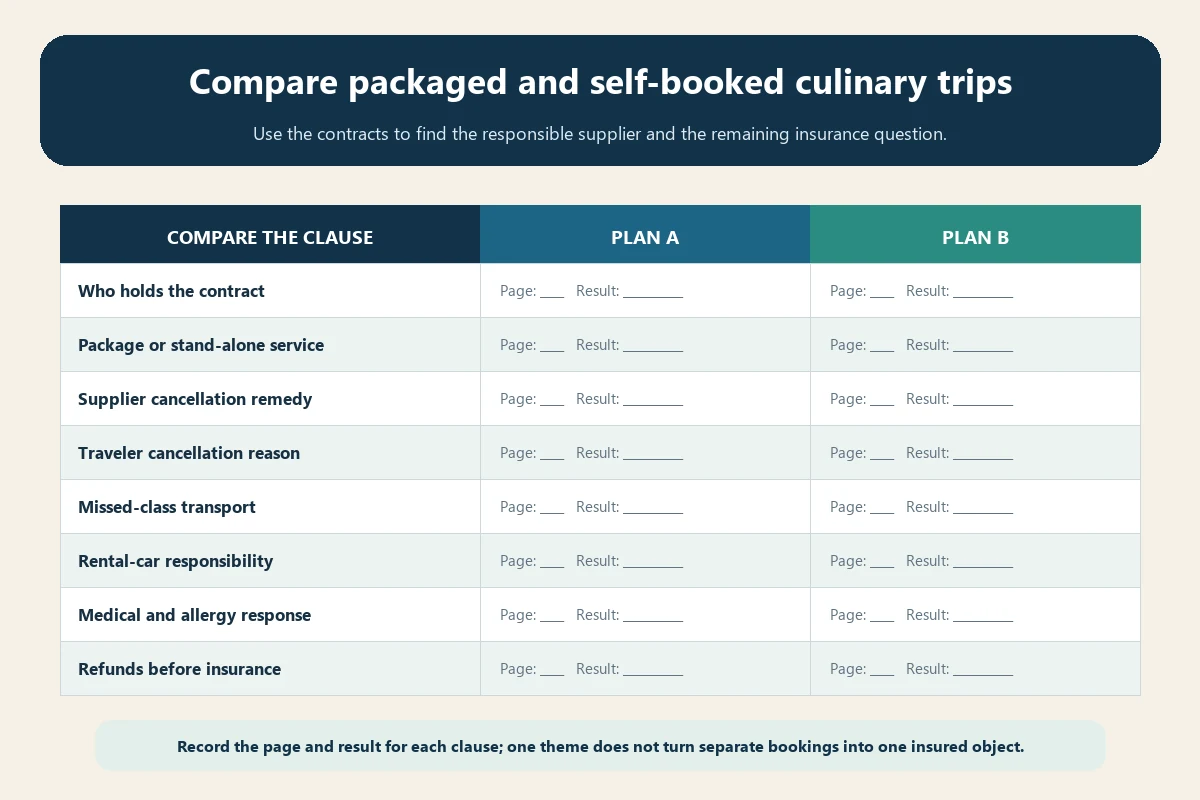
A specialist operator may sell lodging, local transport, guides, tastings and cooking lessons for one price. Another traveler may book every element separately. That distinction affects who must correct a failed service before insurance is considered.
The Your Europe package-travel guidance explains that qualifying packages receive defined consumer protections, while stand-alone services are outside those package rules. Whether a particular booking qualifies depends on how and where the services were purchased, so keep the pre-contract information and final confirmation.
A US resident should not assume every European consumer rule applies merely because the kitchen or hotel is in Europe. The seller, contracting entity, sales channel and governing terms can matter. Ask the organizer to identify the responsible legal entity and complaint route before paying a large deposit.
If a tour operator is responsible for the combined itinerary, request its remedy first. If five independent suppliers hold five contracts, contact each supplier. Our European guided-tour insurance guide covers operator deposits, missed departures and supplier failure in more depth.
Make a cost ledger before choosing a limit
List every payment on its own line:
- package deposit and final balance;
- hotel or farm-stay reservation;
- cooking class, market walk or producer visit;
- winery tasting, meal or ticketed event;
- airfare, rail, ferry and private transfer;
- rental car and prepaid fuel or equipment; and
- taxes, booking fees and optional upgrades.
Add the current refundable amount and cancellation deadline beside each line. The amount at risk changes over time. Insurance should not include money a supplier is already required to return, and a claim cannot pay twice for the same loss.
Use our Europe policy comparison worksheet to record definitions, sublimits and evidence requirements rather than comparing headline totals alone.
Supplier cancellation is not traveler cancellation
When a class or tasting is canceled
Ask the supplier for a refund, replacement session or documented refusal. A canceled afternoon class may create a small admission loss without canceling the hotel or the entire vacation. Standard trip cancellation usually does not turn every itinerary change into a whole-trip claim.
Keep the original schedule, payment receipt, cancellation notice and remedy offered. If the experience was part of a package, send the problem to the organizer as well as the local provider.
When the traveler cannot attend
A policy must connect the traveler’s reason to a covered event. A qualifying illness may differ from a preference change, dietary disappointment or decision to skip an early tour after a late dinner. Our guide to trip cancellation coverage explains how the cause, effective date and nonrefundable loss must align.
When the supplier substitutes an experience
A different chef, vineyard, menu or venue may still fulfill the booking under the supplier’s terms. Compare the substitution with the written description before calling it a cancellation. Insurance does not grade the quality of a meal or assign a personal value to a preferred producer.
Missed culinary experiences depend on the transport chain
A flight delay can cause a missed opening dinner; a local train cancellation can erase a prepaid class. Record the scheduled arrival, event start, transport ticketing arrangement, carrier’s stated cause and replacement offered.
Some policies include a missed-connection or missed-event benefit, but eligible carriers, waiting periods and maximums vary. A two-hour local delay may not meet the same trigger as a canceled transatlantic flight. The separate-ticket missed-connection guide helps locate the point where carrier responsibility ends and insurance may begin.
Do not buy costly replacement transport until checking assistance requirements unless safety or medical urgency makes waiting unreasonable. Preserve timestamps and compare the replacement cost with the value of the experience that can still be reached.
Read alcohol exclusions as contract language
Wine, beer or spirits may be part of a scheduled tasting. That fact alone does not answer a claim. Policies can exclude or limit losses connected to intoxication, alcohol use or unlawful conduct, and the wording can differ materially.
For each plan, record:
- the exact exclusion and defined terms;
- whether causation is required;
- whether the wording refers to a legal threshold or clinical evidence;
- how prescription medication interactions are treated; and
- whether local law or illegal driving changes coverage.
Do not rely on a blanket promise that “wine tours are covered.” The travel insurance exclusions guide shows how a policy can contain a broad benefit and a narrower clause that controls the result.
Driving after tastings creates separate exposure
Use a designated driver, hired transfer or public transport for tasting days. Aside from safety and local law, a collision can involve several contracts: rental damage waiver, credit-card benefit, auto liability and travel insurance.
Ordinary travel medical coverage may address eligible injury treatment without paying for damage to the vehicle. A baggage benefit does not become collision coverage merely because property was inside the car. Read our guide to rental-car coverage abroad before accepting or declining protection at the counter.
Confirm who may drive, territorial restrictions, prohibited roads, reporting deadlines and the effect of alcohol-related violations. Keep the rental agreement and final damage statement; a repair estimate alone may not establish the amount owed.
Prepare for food allergies before the first booking
The European Commission’s allergen guidance identifies required information for 14 allergens in EU food sales, including information for non-prepacked foods. That framework helps communication, but it does not guarantee that every kitchen can prevent cross-contact or accommodate a traveler.
Send dietary and allergy requirements to the operator in writing before paying. Ask what will happen if the class cannot safely accommodate them, whether a substitute activity is offered and which costs remain refundable. Carry the emergency plan and medication prescribed by the traveler’s clinician.
For insurance, examine pre-existing-condition wording, emergency medical limits and whether a pre-existing-condition waiver is available and timely. A known allergy is not something to omit from the preparation file.
Foodborne illness can affect several benefits
The CDC Yellow Book food and water guidance describes risks from contaminated and undercooked foods and recommends careful food and water practices. Culinary travel can include markets, farm visits and hands-on preparation, so medical planning should fit the actual itinerary.
If illness occurs, the immediate issue is appropriate care. Contact the assistance service when required, retain the clinical record and obtain an itemized bill. Our guide to US health insurance abroad explains why a domestic health-plan card may not produce direct billing overseas.
After treatment, separate the possible losses:
- eligible medical expenses;
- unused prepaid experiences;
- additional lodging or transport;
- early return travel; and
- a companion’s costs, if the policy addresses them.
Each benefit can have a different limit, deductible and evidence test. A doctor’s diagnosis does not automatically prove every unused reservation is payable.
Check activities beyond dining
Culinary itineraries may include cycling between vineyards, truffle hunting, farm work, boat trips, hiking or using knives and hot equipment in a class. Give the insurer the specific activity rather than the label “food tour.”
Check personal-liability exclusions, protective-equipment rules, organized-sport wording and any work or volunteer exclusion. The operator’s participant waiver governs a different relationship from the insurance policy and does not prove medical or liability coverage.
Build a clean claim sequence
- Identify the failed service. Name the class, transfer, lodging night or medical event.
- Request the supplier remedy. Obtain the refund, replacement or written decision.
- Document the cause. Keep carrier proof, medical evidence, police reports or official notices.
- Match the policy benefit. Record the covered reason, waiting period, exclusion and limit.
- Claim the remaining amount. Subtract refunds, credits and recoveries before submitting.
The travel insurance claim guide provides a fuller evidence checklist. For expensive packages, save the brochure and itinerary as issued; a later website revision may no longer prove what was promised.
Culinary-tour purchase checklist
- Is the booking a package, linked arrangement or set of stand-alone services?
- Which deposits become nonrefundable, and when?
- Are small classes and tastings included in insured trip cost?
- What happens if a supplier cancels or substitutes an experience?
- Which transport delays can trigger missed-event coverage?
- How does the policy word alcohol, intoxication and unlawful conduct?
- Are rental-car damage and liability covered elsewhere?
- Do medical provisions fit allergies, existing conditions and planned activities?
The U.S. Department of State’s insurance guidance recommends checking overseas medical and evacuation protection rather than assuming a domestic plan will pay. Apply that same document-first approach to every culinary booking.
General information, not insurance, medical or legal advice. Policy wording, supplier contracts and consumer remedies vary by plan, booking method and country. Read the issued documents and obtain professional guidance for personal needs.
