
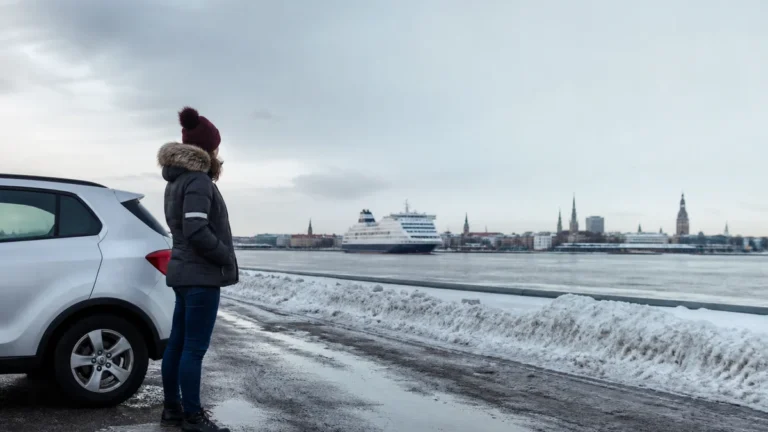
Travel insurance for Latvia from USA trips should account for medical payment, rural response, winter-road rules and Baltic ferry connections. A compact itinerary based only in Riga has different exposures from a February road trip to national parks or a sailing linked to separate flights. Use the real route to test the contract.
Key takeaways
- Prepare for private providers to request payment and preserve full reimbursement records.
- Match medical-transport limits to rural stays, not only to services available in Riga.
- Verify the rental car’s winter tires and equipment at pickup during the regulated season.
- Distinguish ferry passenger rights from travel-insurance delay and interruption benefits.
- Document official causes, actual times, alternatives and refunds before submitting a claim.
Planning information reviewed August 16, 2026. Road rules, ferry schedules, entry procedures, health services and policy wording can change. Confirm current conditions for the travel dates.
Plot the Latvia itinerary by response time
Mark the arrival airport, every Riga stay, rural accommodation, driving leg, ferry terminal and onward country. Add the nearest clinic or hospital to each overnight. The purpose is not to predict an emergency; it is to expose where a simple city medical benefit may be inadequate for the route.
Then list prepaid, nonrefundable costs and flexible bookings separately. Include flights, hotels, car rental, ferry cabins, tours and event tickets. Insure only the amount that remains at risk after the supplier’s cancellation terms. A refundable booking should not inflate the declared trip cost.
A route through Estonia or Lithuania should be tested with the multi-country Europe policy checklist, including transit days.
Verify entry rules and coverage separately
Many U.S. tourists enter Latvia for a short Schengen visit under current visa-free arrangements. That general description does not cover every passport, purpose or duration. Check official rules for the traveler’s citizenship, residence, full itinerary and intended activities.
When a visa applicant needs proof of insurance, the certificate is evidence for an entry process. It is not a complete summary of vehicle, ferry, medical-condition or activity coverage. Review the schedule, definitions and exclusions. The Schengen insurance documentation guide explains what a certificate does and does not establish.
Prepare for the Latvian medical payment path
The U.S. Department of State’s official Latvia travel information says private hospitals and clinics expect payment and that cash may be required. It also describes limited ambulance availability in rural regions and recommends medical-evacuation coverage.
Before purchase, ask a U.S. health insurer whether emergency and urgent care abroad are covered, how out-of-network reimbursement works and which preauthorization rules apply. Ask the travel insurer whether its medical benefit is primary or secondary, whether it can issue a guarantee of payment and what happens when contact is impossible during an emergency.
Carry the assistance number, policy ID and more than one practical payment method. Obtain the diagnosis, clinical record, itemized invoice, prescription and proof of payment. The primary medical insurance guide explains how benefit order changes the claim workflow.
Rural care makes transport wording important
Latvia uses 112 for general emergencies and 113 for ambulance service, as identified in the State Department information. An ambulance to a local facility is not the same benefit as a medically approved transfer, evacuation to another country or repatriation to the United States.
Read who chooses the facility, who determines medical necessity and whether the insurer must approve transport in advance. Ask whether ground ambulance, air ambulance and a medically required escort share one limit. Also check whether search and rescue is excluded or separately capped.
The medical transport and repatriation guide separates these stages and the evidence for each.
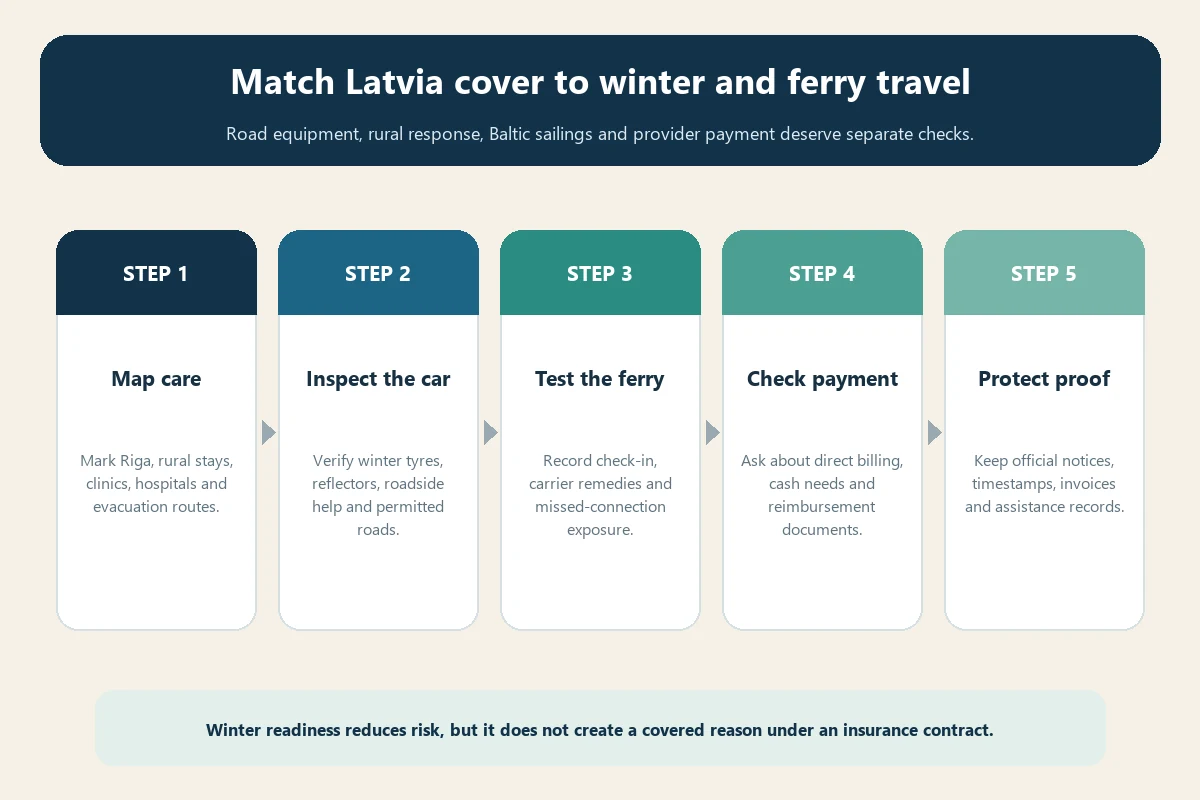
Verify winter tires on the actual rental car
Latvia’s Road Traffic Safety Directorate publishes official winter-tire requirements. Its guidance states that vehicles must use qualifying winter tires from December 1 through March 1 and describes the mountain-and-snowflake marking and tread-depth requirement.
At pickup, photograph each tire marking, tread condition, existing damage and the supplied safety equipment. Confirm roadside assistance, towing, replacement-vehicle terms and permitted countries. A booking-class promise is less useful than evidence of the vehicle actually accepted.
Winter compliance does not create insurance coverage. A collision waiver may exclude tires, glass, undercarriage, unauthorized roads or a driver not listed on the agreement. Credit-card protection can require full payment with the eligible card and rejection of a rental-company waiver.
Use the Europe road-trip insurance guide to compare collision damage, liability, roadside help and traveler medical coverage as separate layers.
Carry a reflector and an incident plan
Latvia’s official tourism portal provides practical transport guidance for driving, public transport and ferry travel. Winter road conditions and limited light outside cities make advance route planning valuable.
Keep reflective clothing accessible rather than packed under luggage. Download an offline map, carry a charged power bank and save the rental assistance number on paper. These steps reduce risk but do not replace insurance. If the car becomes unusable, record the location, weather, road condition, rental response and recovery instructions before arranging an expensive alternative.
Separate four protections for a road incident
| Loss | Possible source | Frequent uncertainty |
|---|---|---|
| Damage to the rental car | Rental waiver, card benefit or travel plan | Tires, glass and prohibited roads |
| Damage or injury to others | Local liability protection | Limit, excluded driver or unauthorized use |
| Breakdown and towing | Rental roadside program | Driver error and remote recovery charges |
| Traveler injury | Health or travel medical policy | Alcohol, activity or authorization exclusions |
Do not use the phrase “full coverage” as a substitute for these definitions. Request the rental agreement and insurance contract before departure when possible.
Build ferry connections with a buffer
A Baltic sailing can be a passenger ferry, an overnight cabin or a vehicle crossing. Record the operator, terminal, check-in deadline, sailing time and separate onward bookings. A flight arriving shortly before check-in may create a self-transfer that neither carrier protects.
The European Union’s official ship passenger-rights page describes assistance and compensation for qualifying cancellations and delays, along with exceptions. Apply to the carrier first for the remedy it owes. Insurance usually addresses only eligible unrecovered loss.
Ask whether a missed ferry is a missed-connection benefit, trip delay or interruption. Check the required cause, waiting period and whether the service qualifies as a common carrier. Keep the operator notice and written response to a refund request.
The ferry travel insurance guide provides a timeline-based claim test.
Weather disruption needs a defined trigger
Snow, ice and wind are seasonal conditions, but insurance responds to contract language. An official closure, common-carrier cancellation or documented accident can be different from choosing not to travel. Save the official cause rather than relying on a general weather screenshot.
Read the severe-weather definition, delay threshold and covered additional expenses. Check whether a replacement hotel, meals, taxi or new ticket must be reasonable and documented. Contact assistance before major spending when safety permits.
A forecast or storm known when the plan is purchased can be treated as foreseeable. Buying after disruption begins generally does not turn it into a covered event.
Winter activities are not automatically included
List cross-country skiing, downhill skiing, snowboarding, skating, sledding, snowmobiles and guided nature activities. Search the policy for the exact activity and for conditions involving guides, marked areas, helmets, racing or motorized use.
Medical coverage, rescue, equipment loss and third-party liability can have different rules. A winter-sports rider may cover an injury but exclude damage to rented equipment. A snowmobile can be treated as a motor vehicle with separate licensing and liability conditions.
The winter-sports exclusion guide shows how to audit named activities.
Compare Latvia plans with route-specific questions
- Are Latvia and all Estonia, Lithuania, Sweden or Finland segments included?
- How will a private clinic or hospital be paid?
- What are the medical deductible, maximum and pre-existing-condition rules?
- When are ambulance, transfer, evacuation and repatriation covered?
- Are the exact rental vehicle, roads and neighboring countries permitted?
- Which ferry disruptions and missed connections qualify?
- What delay period applies before lodging and meals become eligible?
- Which winter activities and equipment are excluded?
Use the policy issued for the purchaser’s U.S. state. Definitions, limits and exclusions can differ from a general comparison page.
Assemble evidence before leaving Latvia
For medical care, collect the complete clinical and financial record. For a road incident, retain photos, police or rental reports, towing records and the final damage statement. For a ferry loss, preserve check-in compliance, the carrier notice, actual times, alternatives and refund outcome.
Submit only the net unrecovered amount. Supplier refunds, carrier compensation and card benefits should be disclosed. Create an index of every document and connect each expense to the event. The claim-filing guide offers a practical folder structure.
Before final purchase, read government-advisory, war, sanctions and country exclusions for every stop. The country-exclusions guide explains why a “worldwide” label is not the complete geographic rule.
Frequently asked questions
Is travel insurance required for every U.S. tourist in Latvia?
Not under one universal rule for every short U.S. tourist. A traveler’s passport, visa status, purpose and length of stay determine formal insurance documentation. Verify current entry requirements.
Will private Latvian hospitals accept a U.S. insurance card?
Do not assume they will. A provider may require payment. Ask the insurer about assistance and direct billing, and be ready to preserve records for reimbursement.
Does a compliant winter rental car eliminate insurance exclusions?
No. Legal equipment, the rental waiver, liability, roadside service and travel insurance are separate. Contract exclusions can still apply.
Will insurance pay when wind cancels a Baltic ferry?
Only if the facts meet a covered trigger and produce an eligible unrecovered expense. Carrier rights and refunds are considered first.
Is rural ambulance transport the same as medical evacuation?
No. Local emergency response, hospital transfer, evacuation and repatriation can have different definitions, decision makers and limits.
This article is educational and is not legal, medical or insurance advice. Official authorities, providers, carriers and the issued policy control.
