
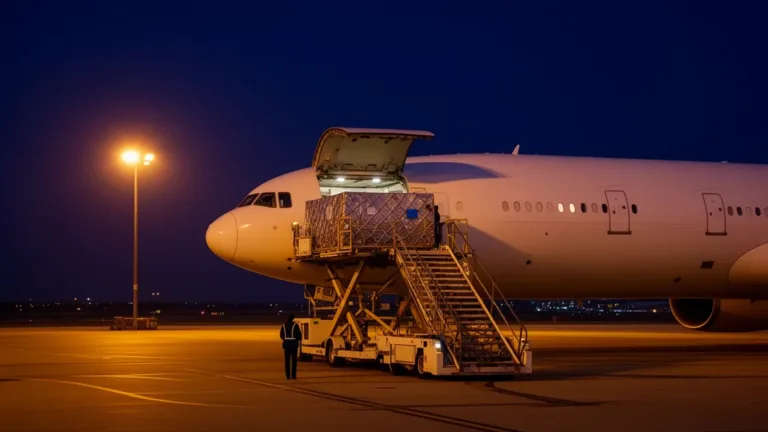
Repatriation of remains travel insurance is the benefit that pays to return a body, or ashes, from the country where a death occurred to the home country. It sits in almost every travel medical policy, usually one line below emergency medical evacuation, usually with its own separate limit, and it is one of the few benefits where the person who bought the policy is never the person who has to use it.
It is worth understanding for one blunt reason: the US government does not pay to bring a citizen’s body home. Consular officers will help the family, issue the official documentation and explain local procedure, but the cost falls on the family or on an insurance policy. If there is no policy and no other arrangement, the family pays, in a foreign country, in a foreign language, under time pressure.
What the benefit actually covers
Policies vary in wording, but the benefit generally pays the reasonable and necessary costs of preparing and transporting remains from the place of death to the home country or the place of burial. In practice that covers a defined set of services rather than an open budget:
- Local mortuary handling and preparation, including embalming where the destination country or the airline requires it
- The container required for air transport, which is not an ordinary coffin
- Documentation and permits needed to release and export the remains
- Air transport as cargo, and ground transport at both ends
- In many policies, cremation abroad and return of ashes as an alternative, usually at a lower capped amount
What it does not cover, in most wordings, is the funeral itself. Burial or cremation costs incurred at home after the remains arrive are typically excluded, because that expense would have arisen anyway. A small number of policies pay a modest contribution towards a local burial or cremation abroad, and that is usually presented as an alternative to repatriation rather than in addition to it.
How it differs from medical evacuation
These two benefits are printed next to each other and are constantly confused. They are structurally different, and the difference matters when you are reading a schedule of benefits.
| Emergency medical evacuation | Repatriation of remains | |
|---|---|---|
| Purpose | Move a living patient to adequate care, or home once stable enough to travel | Return a body or ashes to the home country |
| Who decides | The insurer’s medical team, on the test of medical necessity | The next of kin, within what the policy authorizes |
| Typical limit | A separate and usually large monetary limit | A separate and usually much smaller sub-limit |
| Approval | Pre-approval by the assistance company is normally a condition of payment | Pre-approval by the assistance company is normally a condition of payment |
| Alternative | None | Many policies allow local burial or cremation instead, at a capped amount |
Because the two limits are separate, a generous evacuation limit tells you nothing about the repatriation limit. If you are checking a policy, read both lines. Our guide to what an evacuation limit actually has to be covers the other half of this pair.
Why the cost is not simply the price of a plane ticket
Human remains cannot travel as ordinary baggage. They move as air cargo, which means the shipment has to be booked through a party the airline accepts, prepared to the airline’s and the destination country’s requirements, and accompanied by a specific set of documents. Some countries and some carriers require embalming, and many require a hermetically sealed inner container inside an outer transport case, which is heavier and bulkier than a standard coffin and priced accordingly. Add local mortuary fees, translation and legalisation of documents, ground transport at both ends and the funeral director’s coordination at the receiving end, and the total is normally several times the cost of a passenger seat on the same route.
Two variables move it further. Distance and route matter, because indirect routings require a carrier at each leg willing to accept the shipment. So does whether the death is under investigation: where a post-mortem or a coroner’s process is required, remains cannot be released until it concludes, and costs accrue while they are held.
The documents involved
The exact list depends on both countries, but a repatriation typically needs a local death certificate, a certificate that the remains have been prepared for transport, an export or transit permit from the local authority, and consular documentation from the home country. For a US citizen who dies abroad, the US embassy or consulate issues a Consular Report of Death Abroad, which is the document US institutions generally accept as proof of death in place of a foreign certificate. Consular officers also help the next of kin identify local funeral directors and understand local law. They do not pay the costs.
How policies word the benefit, and where it fails
Three conditions do most of the work in a repatriation clause, and all three are easy to fall foul of.
- Prior authorization. Arrangements almost always have to be made by, or approved in advance by, the insurer’s 24-hour assistance company. A family that engages a local funeral director independently and presents the invoice afterwards frequently finds the claim reduced or refused. The first call is to the number on the policy card, before anything is arranged.
- The sub-limit. Repatriation is capped separately, and the cap is not always generous relative to the real cost of a long-haul repatriation. Where a policy also offers local burial or cremation, that alternative is capped lower again.
- Reasonable and customary. Where the wording pays reasonable and necessary expenses rather than a fixed sum, the insurer decides what was reasonable. Using the assistance company’s own network is what keeps that question from becoming a dispute.
The wider exclusions matter too, because they apply to this benefit as they do to any other. If the death arises from a condition that falls outside the pre-existing condition terms, from an activity the policy excludes, from intoxication, or from travel outside the covered dates or covered region, the repatriation benefit fails along with the medical benefit. The standard list is set out in our guide to travel insurance exclusions, and it is worth reading in this context specifically, because a family discovering an exclusion at this moment has no ability to fix it.
What this means: repatriation of remains is a separately capped benefit that normally requires the insurer’s assistance company to arrange or approve the transport in advance. Check the sub-limit as a distinct figure from the evacuation limit, keep the 24-hour assistance number somewhere a traveling companion or family member can find it, and do not let anyone engage a funeral director independently before that call is made.
What a traveling companion should do first
The sequence is narrow. Notify local police or the hospital as required by local law, so that the local death certificate process starts. Contact the nearest embassy or consulate of the deceased’s home country. Then call the assistance number on the travel policy, before making any commitment to a local funeral home. The assistance company will typically take over liaison with the mortuary, the consulate and the airline, because it does this routinely and the family does not. If the death followed an admission, the hospital documentation gathered during that admission matters here as well; our guide on what to do if you are hospitalised abroad sets out what to collect and when.
Frequently asked questions
Does the policy pay for the funeral at home?
Generally no. Most wordings cover preparation and transport of the remains to the home country or place of burial, and exclude the funeral, burial plot or cremation carried out at home, on the reasoning that those costs would have arisen regardless. Read the benefit description rather than assuming either way.
Who actually organizes everything?
The insurer’s assistance company normally coordinates the local funeral director, the documentation, the consulate and the airline booking, and instructs a receiving funeral director at the destination. That coordination is a large part of the value of the benefit, which is why arranging things independently and claiming afterwards tends to go badly.
Is cremation abroad allowed under the policy?
Many policies permit cremation abroad and return of the ashes as an alternative to repatriating a body, usually at a lower capped amount, and some pay a contribution towards local burial. Whether it is possible at all also depends on local law and on any ongoing investigation into the death. The assistance company can confirm both points quickly.
Does the benefit apply if the death was related to a pre-existing condition?
Only if the policy covers that condition. Repatriation is not carved out from the policy’s general exclusions, so a death arising from an undeclared or excluded pre-existing condition can take the repatriation benefit with it. Where a pre-existing condition is involved, the declaration made at purchase, and any waiver obtained, is what governs. Older travelers should read this alongside what changes at the age bands, since both the limits and the medical questions tighten with age.
Returning mortal remains is a legal, consular, insurance, mortuary and transport sequence—not simply an airline booking. Use the repatriation of remains process travel insurance guide to map the roles, approvals, documents, handoffs, costs and receiving arrangements from first notification through final delivery.
Local burial or cremation can be a separate, lower-capped alternative to returning mortal remains—not a second funeral budget. Use the local burial travel insurance guide to compare disposition routes, authorization, eligible expenses, exclusions, local law, documents and family responsibilities before committing funds.
